The diagnostic evaluation
Erectile dysfunction is a symptom. The diagnostic study is how we find its cause — so treatment is chosen for a reason, not by trial and error.
George W. Carroll, MD Florida license ME48111NPI 1073644985 Men’s sexual medicine since 1992
“We can measure all the moving parts of an erection in a non-invasive study.”
You’ll know exactly what’s involved before you agree to anything.
The conversation starts with your situation — what’s happening, what you’ve already tried, and what has changed. Dr. Carroll takes it from there and decides with you whether a diagnostic study would actually tell him something worth knowing. Not every man needs one, and not every treatment calls for one.
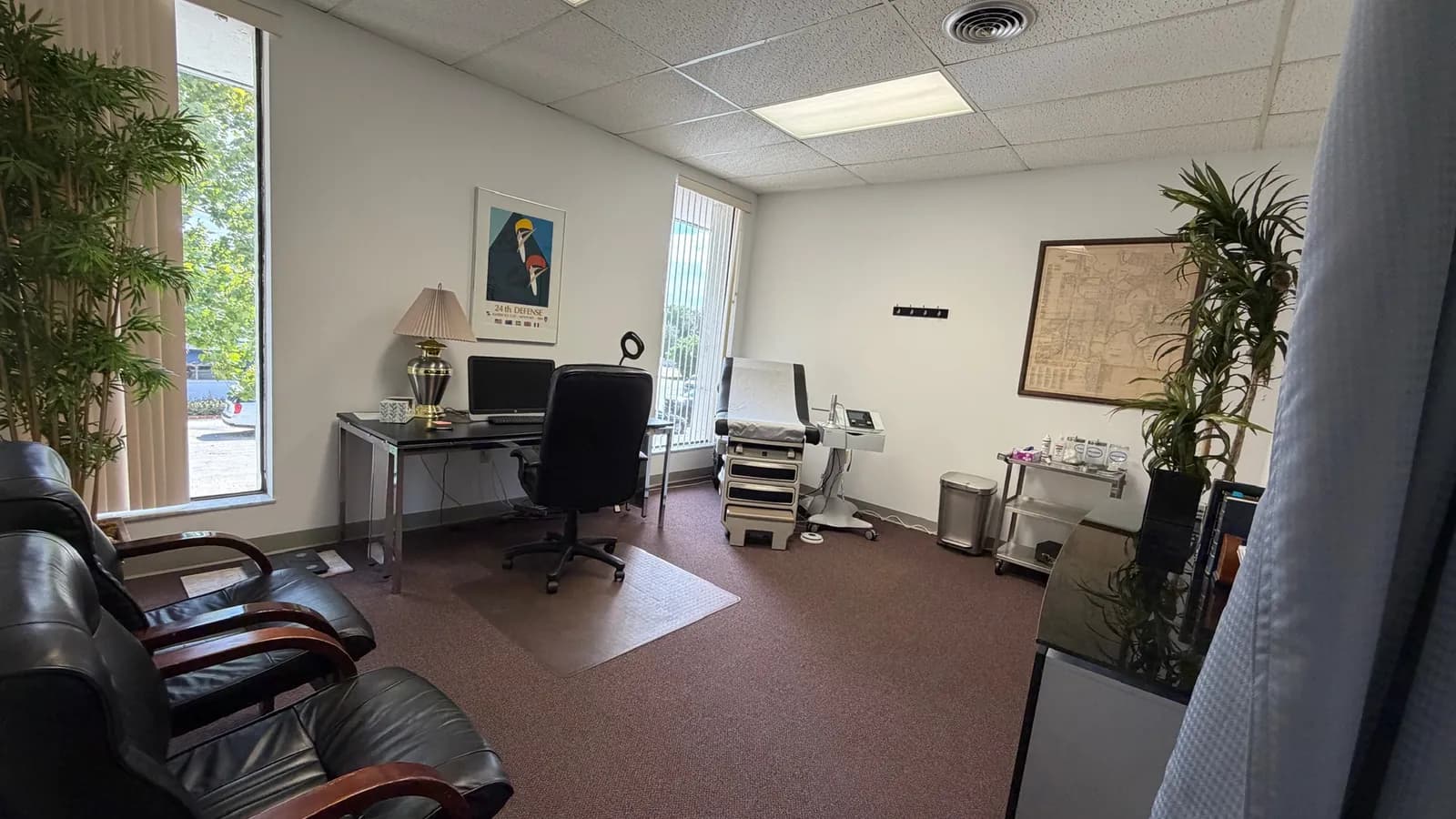
If he does recommend it, he walks you through exactly what it involves, step by step, before you agree to anything. It is done privately in our Maitland office.
Is the study right for you? Dr. Carroll decides that with you.
Not every treatment requires the full work-up. Some situations are straightforward enough that Dr. Carroll can move ahead without it; others are exactly the ones where guessing has already cost a man years. He goes through your history with you and tells you which of those you are in, and why — before you commit to the study or to anything else.
What the evaluation buys you, when it is the right step, is a treatment chosen from your own findings rather than from a menu.
The diagnostic evaluation, in brief
The diagnostic evaluation at Orlando Sexual Medicine identifies the cause of erectile dysfunction before a treatment is chosen. It pairs a penile duplex Doppler ultrasound study, which measures blood flow in both cavernosal arteries before and after a test-dose injection, with biothesiometry, a vibration-sensation test of the penile nerves compared against age-matched normal values; any curvature is documented during the same study. The same symptom can come from a venous leak, an arterial inflow problem, reduced nerve sensitivity, a hormonal issue, or a combination, and those call for different treatments. The study distinguishes them, so treatment is chosen for a reason rather than by trial and error. It is recommended rather than required: Dr. Carroll decides with each man whether it is the right step, and it is performed privately in our Maitland office.
What the study measures
The instrument is the same duplex ultrasound used to check blood flow in the carotid arteries of the neck, or the arteries of the legs — a probe passed over the skin that watches blood move in real time. Here it is aimed at the arteries that fill the penis.
The evaluation is a penile duplex Doppler ultrasound study: blood flow is measured in both cavernosal arteries before a test-dose injection, and again at 5, 10, 15, and 20 minutes, in two positions — recording arterial velocities and resistive index, waveform quality, and the response achieved — in plain terms, how strongly blood arrives and whether it stays. Any curvature is documented during the same study — which is also how Peyronie’s disease is evaluated here.
It is paired with biothesiometry — a vibration-sensation test of the penile nerves compared against age-matched normal values.
The intake also includes validated symptom questionnaires (IIEF-5/SHIM and qADAM), scored against their published ranges. They inform the picture rather than decide it — no questionnaire is the diagnosis, and Dr. Carroll reads the answers alongside the study findings and your history.
Why it matters
The same symptom can come from very different problems: a venous leak (blood enters but doesn’t stay), an arterial inflow problem (blood doesn’t arrive well), reduced nerve sensitivity, a hormonal issue — or a combination. Those call for different treatments. The study distinguishes them.
This evaluation is recommended for men being evaluated for erectile dysfunction. It is your choice — but treating without it means choosing a therapy before knowing the issue’s root cause.
What to expect
- Performed privately in our Maitland office.
- The study is booked as its own appointment — it is not done at your first consultation. When you come in for it, treatment can usually be started during the same visit, if you decide to go ahead that day.
- You are monitored in the office until the study is complete, and you leave with findings that are explained to you plainly.
Common questions
- Is the diagnostic study required before treatment?
- It is recommended, not required. Dr. Carroll will explain what can and cannot be known without it, and the decision is yours.
- Does it hurt?
- Dr. Carroll explains every step before it happens, and stops whenever you want. A very fine needle is used to deliver a small test dose, along with an external ultrasound probe. Most men tell Dr. Carroll it was easier than they expected — and nothing proceeds until you say so.
- How long does it take?
- The flow measurements are taken over a 20-minute window; our office will tell you how long to plan for the full visit.
Care provided by George Carroll, M.D.
Medically reviewed by George W. Carroll, MD (Florida license ME48111) · Reviewed August 2026
Find out what’s actually going on
Even if you choose to do nothing, it’s worth knowing what’s going on. Dr. Carroll will tell you, and the decision stays yours. One call to our office starts it — no obligation, no pressure, and no one pushing you toward a decision.
Office hours: Mon–Fri 9:00 AM – 5:00 PM. Callbacks are returned the same business day — the next business day for requests made after hours.